

Loading Pentagon Infrastructures...
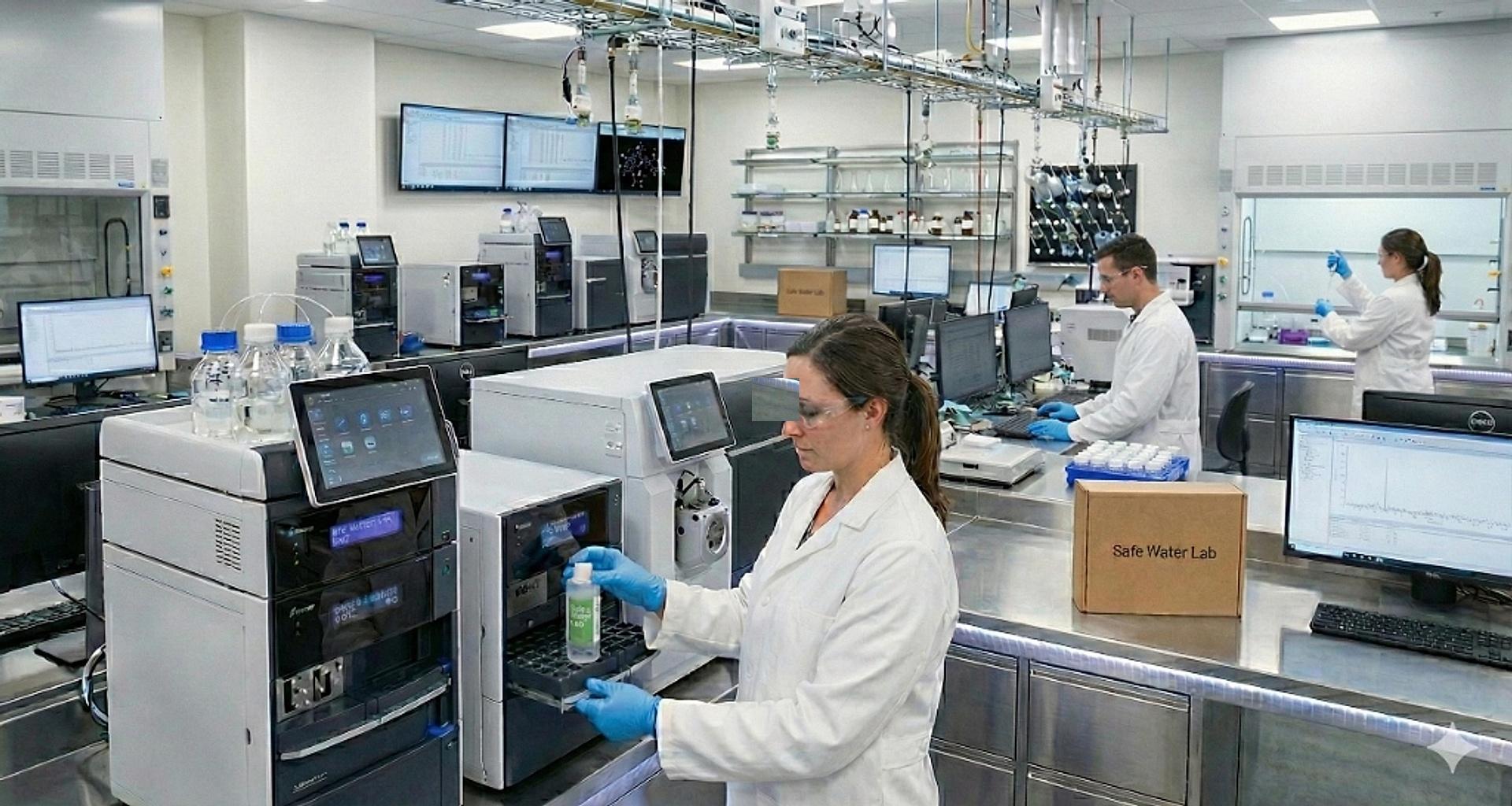
Pentagon Infrastructures coordinates water quality testing for different types of water sources through external laboratories. Testing helps assess water quality and its suitability for the intended purpose.
Water quality varies considerably across Chennai and surrounding regions, from coastal borewells with elevated salinity and dissolved solids to utility supplies and surface water sources. Assessing water characteristics is essential to confirm whether water is suitable for construction batching, borewell usage, or other site utilities.
Pentagon Infrastructures coordinates water quality testing for different types of water sources through external laboratories. All water samples are submitted directly to specialized external laboratories for comprehensive chemical analysis. Testing helps assess water quality and its suitability for the intended purpose, ensuring informed decision-making without operating an in-house laboratory.

Core chemical and physical parameters evaluated through external laboratories to assess water characteristics and suitability.
Measures whether water is acidic, neutral, or alkaline. Checking pH helps evaluate potential corrosiveness to plumbing and structural materials or compatibility with construction and utility uses.
Evaluates chloride levels across water samples. Elevated chloride content can promote corrosion of metals and structural reinforcement steel and cause pitting damage over time.
Measures sulphate concentrations in the water. High sulphate levels can react chemically with cementitious compounds, potentially causing internal expansion or degradation in concrete and masonry.
Assesses total dissolved mineral solids and filterable suspended matter to determine general mineral density, clarity, and suitability for site operations.
Determines calcium and magnesium concentrations, helping assess scaling tendencies, water hardness, and general applicability for domestic, borewell, or utility requirements.
Evaluates the buffering capacity and neutralising characteristics of the water sample to identify any abnormal chemical reactivity before application.
Testing water samples from different types of water sources through external laboratories.
Evaluating water used in concrete batching, curing, and masonry mortar to verify chemical suitability and safeguard building materials.
Assessing mineral density, salinity, and quality parameters of on-site borewells and wells for site usage and utility planning.
Checking water quality for equipment cooling, dust suppression, soil compaction watering, and general site facilities.
Testing water supplied by commercial tankers or alternate sources to ensure consistent quality before use.
Follow proper sample handling to ensure representative laboratory analysis for your site water.
To confirm the appropriate testing parameters and provide a formal quotation, please provide:
Accurate chemical evaluation requires that water samples represent true source conditions:
Common questions regarding water sources, sample collection, and external laboratory testing coordination.
Run the borewell or source pump for 10 to 15 minutes to flush standing water from casing pipes. Rinse a clean, 2-liter polyethylene or glass container with the source water, fill it completely with minimal headspace, seal it tightly, and label it with the source type, date, and project location before submitting.
Planning foundation works? In addition to water analysis, assess ground bearing capacity with our Geotechnical Soil Investigation & SBC Testing.
* Note: Pentagon Infrastructures coordinates water quality testing for different types of water sources through external laboratories and does not operate an in-house water testing laboratory. All water samples are submitted to external laboratories for testing. Testing helps assess water quality and its suitability for the intended purpose. Contact our team to coordinate sample submission.
Pentagon Infrastructures coordinates water quality testing for different types of water sources through external laboratories. Testing helps assess water quality and its suitability for the intended purpose.